
These YouTube websites and videos have been selected as additional resources that explain how neoliberalism and laws impact ordinary people all around the globe. The issues are clearly explained and the values of the presenters center on the common good.
All video interviews were done in 2025 focusing on books the authors had just published.
David Korten: Why Monetary Reform Is Essential to a Viable Human Future
 Korten holds an MBA and a Ph.D. from the Stanford University Graduate School of Business. He spent over 30 years in international development, including serving as a visiting professor at the Harvard Business School and working for the Ford Foundation and USAID in Africa, Asia, and Latin America. He also worked on the Earth Charter. He is best known for his international bestseller When Corporations Rule the World. His other books include The Great Turning: From Empire to Earth Community and Agenda for a New Economy. Korten is the founder and president of the Living Economies Forum and a co-founder and board chair emeritus of YES! Magazine, a nonprofit publication focused on sustainability and alternative economics.
In this video, David Korten clearly explains the banking system and argues a viable future requires monetary transformation—democratize the Fed, issue debt-free sovereign money, protect pensions, and end Wall Street’s debt trap—so we can fund guaranteed living-wage jobs and an ecological civilization. He outlines a four-part agenda, cites New Deal precedents and greenbacks, critiques speculative finance and UBI, and urges localization, co-ops, and clear public education to reclaim money for people and planet.
Watch on YouTube, from 3:25 to 34:20.
David Korten Explores the Vision of Ecological Civilizations
 An Ecological Civilization is the future that thoughtful humans envision when asked to describe the future to which they aspire. It is the future described by the Earth Charter; a document produced by the most inclusive, participatory drafting process in human experience. That future has four defining features:
- Respect and care for the community of life
- Ecological integrity
- Social and economic justice
- Democracy, nonviolence, and peace
It is within our means—if we together so chose—to create the world of material sufficiency and spiritual abundance for all that the Earth Charter describes, but time is fast running out. So, what is an Ecological Civilization? It is the future defined by the world’s people as expressed by the Earth Charter. It is the name for the future to which caring, responsible humans aspire.
Watch on YouTube (1 minute 30 seconds).
American Monetary Institute
The American Monetary Institute (AMI) is part of a growing ecosystem of individuals, groups, and organizations dedicated to monetary reform and economic justice. The American Monetary Institute (AMI) is a publicly supported charity, founded in 1996 to present the results of our research in a manner understandable by the average citizen; leading to monetary reforms which bring forth a greater level of economic justice and a more equitable and efficient functioning of government.
This field deserves serious study because while attention is usually focused on the elections of presidents, prime ministers, and representatives, the real outcomes in society – whether there will be general economic justice or special financial privileges for the few – are often quietly determined behind the scenes by the structure of a society’s monetary system.
Monetary realities usually affect the citizen’s daily life far more than the Congress, President, or Supreme Court. AMI’s research shows that a main arena of human struggle has been over the monetary control of societies. This control is exercised through monetary theory – in obscure doctrines about the nature of money. If it had to be summarized in one sentence it is that by mis-defining the nature of money, special interests have often been able to control a society’s monetary system, and in turn, the society itself.
The American Monetary Institute on YouTube.
Ray Madoff: The Second Estate: How the Tax Code Made an American Aristocracy
 America’s New Aristocracy. The richest Americans control $46 trillion in wealth—but many pay little or no federal tax. Boston College Law professor Ray Madoff, author of “The Second Estate: How the Tax Code Made an American Aristocracy,” explains how a century of tax policy created two Americas: one that pays taxes and one that doesn’t.
Drawing on her new book, Madoff reveals how the wealthy use legal tools—inheritance loopholes, trusts, and philanthropy—to avoid taxation altogether. She shows how “charitable giving” often benefits billionaires more than the public, and how our tax code has quietly built an American aristocracy. Amid conflicting narratives about the drivers of wealth and inequality in the United States, one constant hovers in the background: the US tax code. No political force has been more consequential—or more utterly opaque—than the 7,000-page document that details who pays what in American society and government. Most of us have a sense that it’s an unfair system. But does anyone know exactly how it’s unfair?
Legal scholar Ray D. Madoff knows. In The Second Estate, she offers an unprecedented look behind the scenes of America’s byzantine system of taxation, laying bare not only its capacity to consolidate wealth but also the mechanisms by which it has created two fundamentally separate American societies: the working Americans who pay and the ultra-rich who benefit.
This is not a story of offshore accounts or secret tax havens. In The Second Estate, Madoff shows that the US system itself has, over time, been stripped and reconstituted such that it now offers a series of secret paths, hidden in plain sight, for wealthy people in the know to avoid taxation altogether. Through the strategic avoidance of traditional income, leveraging of investments and debt, and exploitation of rules designed to promote charitable giving, America’s wealthy do more than just pay less than their share; they remove themselves from the tax system entirely. Wealth becomes its own sovereign state, and the living is surprisingly – and maddeningly – cheap. Madoff calls for a new vision of stewardship—where wealth is once again tied to responsibility, and the public good comes before private dynasties.
Watch at the Institute for New Economic Thinking (25 minutes).
Institute for New Economic Thinking: A Global Network of Innovative Scholars
Founded in the wake of the financial crisis in 2009, the Institute for New Economic Thinking (INET) is a nonpartisan, nonprofit organization devoted to developing and sharing the ideas that can repair our broken economy and create a more equal, prosperous, and just society. To meet current and future challenges, we conduct and commission research, convene forums for exchanging ideas, develop curricula, and nurture a global community of young scholars.
We have seen all too clearly how free market fundamentalism, fiscal austerity, financialization and corporate influence in politics have endangered economies, communities, and the planet as a whole. What is the alternative?
We need a new vision of the economy that aims to serve society. That’s why INET carefully incubates new economic thinking within the academy and beyond. We work to guide the field away from economic orthodoxy so that it can free itself of inertia and past failures. We then promote the new economic thinking we develop and support among influencers, policymakers, and the engaged public so that it can have real-world impact.
ineteconomics.org · All of INET’s videos.
Gerald Epstein: Busting the Bankers’ Club: Finance for the Rest of Us
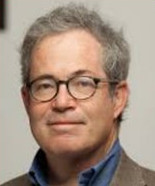 Professor Gerald Epstein, Founding Codirector of the Political Economy Research Institute at the University of Massachusetts Amherst.
An eye-opening account of the failures of our financial system, the sources of its staying power, and the path to meaningful economic reform. Bankers brought the global economic system to its knees in 2007 and nearly did the same in 2020. Both times, the US government bailed out the banks and left them in control. How can we end this cycle of trillion-dollar bailouts and make finance work for the rest of us? Busting the Bankers’ Club confronts the powerful people and institutions that benefit from our broken financial system–and the struggle to create an alternative.
Drawing from decades of research on the history, economics, and politics of banking, economist Gerald Epstein shows that any meaningful reform will require breaking up this club of politicians, economists, lawyers, and CEOs who sustain the status quo. Thankfully, there are thousands of activists, experts, and public officials who are working to do just that. Clear-eyed and hopeful, Busting the Bankers’ Club centers the individuals and groups fighting for a financial system that will better serve the needs of the marginalized and support important transitions to a greener, fairer economy.
Watch the talk (18 minutes 44 seconds).
Katharina Pistor: The Laws of Capitalism
 All things can be coded as capital, with the right legal coding. Watch the series trailer.
Katharina Pistor is the Edwin B. Parker Professor of Comparative Law at Columbia University; Director, Center on Global Legal Transformation; Member, Committee on Global Thought; Member of the European Academy of Sciences; Fellow of the European Corporate Governance Institute (ECGI); and Research Associate with the Centre for Economic Policy Research (CEPR) and the Institute for New Economic Thinking (INET).
The Laws of Capitalism lectures:
- Coding Land and Ideas
- Coding Debt
- Firms
- The Tool Kit
- Masters of the Code
- A Code for the Globe
- Transforming the Code of Capital
The Francesco Movement
Inspired by Pope Francis’ Economy of St. Francis the Francesco Collaborative gathers Catholic investors and close associates to explore practices of “faith-first investing” that nurture economic futures rooted in solidarity and embody the prophetic edge of Catholic investing. Emerging from the Economy of Francesco movement, we’ve begun to curate conversations around investing, leadership, and the solidarity economy.
Francesco Collaborative · The Francesco Collaborative on YouTube.
- Rethinking Economics: How Proximate Ownership Can Restore the Soul of Capitalism | David Harlley
- Rethinking Philanthropy: How the Better Way Foundation Funds Indigenous Futures
Private Equity’s Latest Victim? Your Grandma’s Nursing Home.
 Excellent explanation of how private equity destroys good firms for profit. Sen. Elizabeth Warren is introducing a bill into Congress to stop this devastating corporate greed. She needs our support.